While law-abiding customers are harassed for KYC and have to comply with endless paperwork even to open and close accounts, DHFL could easily open nearly 260,000 fake home-loan accounts, reveals Debashis Basu.

The year 2014-15 could well go as one of long-pending financial sector reforms, expected to have a lasting impact.

'The policy focus of the government should have been on creating more good quality jobs but that was not their focus.'

The next revision will make the rates similar to those of bank FDs.


'Sell part of your portfolio where you're making good money, especially in small caps and mid caps.' 'The money which you take home is yours. The money which is there on paper is not yours.

PNB has rich experience in the integration of commercial banks.

Fintech companies believe that the impact of Reserve Bank of India's order last week on unsecured loans will be visible in six to 12 months and prompt them to diversify and strengthen their secured portfolio. Fintechs which source funds through banks or non-banking finance companies (NBFCs) are looking at quickly building their secured portfolio options to at least 40 per cent of their total portfolio. "Over the medium to long term, as part of our product strategy, we are evaluating secured products which can be enabled over a digital platform" said Yogi Sadana, the founder of Zype, a lending-focussed fintech.

'Dharti par jo Rab hota hai, woh hai pitaah (There's a God on earth, and it's a Father).'

rediffGURU Ramalingam Kalirajan answers your personal finance queries.

Wall Street-correlated stock markets are facing the risk of correction, as Christopher Wood, the global head of equity strategy at Jefferies, conveys to investors in his latest edition of GREED & fear. Rising crude oil prices, which are nearing $100 a barrel (Brent), pose a threat to the global central bank's battle against inflation and have led to a re-evaluation of its exposure to Indian stocks. "The potential for more US Federal Reserve (Fed) rate hikes, combined with the risk that monetary tightening finally bites as regards the economy, remains a risk for Wall Street-correlated world stock markets. "There is also the oil factor. This is why GREED & fear continues to believe the pain trade is down. "Areas in Asia, such as Indian midcaps, which have already done very well, are at obvious risk of some profit-taking," writes Wood.

Ramalingam Kalirajan explains the pros and cons of both investment types.

Chief Economic Advisor V Anantha Nageswaran on Thursday said the economy is expected to grow at 6.5 per cent in the current fiscal notwithstanding deficient rains in August. India recorded economic growth of 7.8 per cent in the April-June quarter of 2023-24 against 13.1 per cent in the year-ago period. India's economy in Q1 grew at the fastest pace in a year, on the shoulders of a boost in capital expenditure both at central and state levels, along with stronger consumption demand, especially in rural areas, and improved performance in the services sector, he said.

Bandhan Bank has filed a draft red herring prospectus with Sebi for an IPO of up to 119 million equity shares, with face value of Rs 10 each.
Low earners, who only months ago were being courted aggressively by private banks and finance companies, have begun returning to him for small loans. The problem of rural debt in India was highlighted last month when the government used the budget to grant a $15bn waiver to indebted farmers. But bankers say the debt troubles in agricultural areas are being matched by rising defaults among urban lower earners.

If you invest for the shorter-term now, you will be able to roll over to higher rates when the interest-rate cycle turns, advises Sarbajeet K Sen.

Stocks of public sector undertakings (PSUs) have been on fire in the past year as investors cheered an improvement in key operating metrics and embraced counters of these state-owned enterprises, analysts suggest. The S&P BSE PSU Index has gained over 90 per cent in the past year, rising much higher than the S&P BSE Sensex, which has rose nearly 19 per cent during this period, according to ACE Equity data. The BSE PSU Index, reports show, has delivered a compound annual growth rate (CAGR) of 28 per cent (including dividends reinvestments) over five years and risen by almost 60 per cent in the past year.

Only the top 5 per cent profit makers account for 75 per cent of profits.

Why can't we have a sunset clause for the ARCs, which is a global norm? questions Tamal Bandyopadhyay.

Fitch Ratings on Monday said the shock to economic activity from the latest wave of COVID-19 pandemic will be less severe than the one in 2020, but recovery is likely to be delayed as economic activity dropped in April-May. The global rating agency said there are growing indications that the latest wave of COVID-19 infections will add to risks among financial institutions (FIs) and anticipates that the Reserve Bank of India (RBI) may introduce additional measures to support the financial sector if indications of economic stress mount.

If the CBDCs don't offer interest, why will people shift from cash to CBDCs?, asks Tamal Bandyopadhyay.

If the interest rate on bank deposits is linked to any external benchmark, it would jeopardise the banks' fund-raising ability. Interest rates on small savings schemes are likely to be reduced very shortly, to maintain parity. All these steps would indeed affect retired people, and particularly those dependent on interest income, says Arindam Gupta.

Nearly 40 per cent of IITians sitting for placements in 2024 are yet to receive job offers, showing a doubling of the 'unplaced' in the last three years from 19 per cent in 2021-2022 to 38 per cent in 2023-2024.

Finance Minister Nirmala Sitharaman's Rs 30,600 crore government guarantee for the bad bank has changed the body language of bankers for the better, observes Tamal Bandyopadhyay.

Jaitley said banking network is expanding hugely and the health of banks reflects on the challenges for the economy.
.jpg)
2014 made a lot of promises; can the new year deliver?
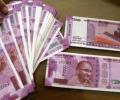
"Cash is still quite high in the system. There is also stocking of Rs 2,000 notes in evidence. The expansion of digital payments is taking place all over the world. It is happening in India as well. The pace is much slower," S C Garg, who took VRS from government service after he was abruptly shifted out of the finance ministry, said in a note.

More cos could join the likes of Burger King and Antony Waste in giving listing another shot.

IPO-bound mobility platform Ola, said it has successfully raised $500 million via a Term Loan B (TLB) from marquee international institutional investors. This term loan has no impact on the valuation of Bhavish Aggarwal-led Ola. The Bengaluru-based firm recently raised $139 million. This is part of a $1 billion funding round for which the company is in talks with investors, increasing its valuation to about $7.5 billion, according to the sources.

From the Sensex pack, Nestle, Tata Steel, Tata Motors, Bharti Airtel, Larsen & Toubro, Power Grid, NTPC, Tata Consultancy Services, Tech Mahindra, Infosys and Axis Bank were the major gainers. Kotak Mahindra Bank, Maruti, Bajaj Finance, Mahindra & Mahindra and ICICI Bank were the laggards.

In FY23, the State Bank of India (SBI) reported a 57.4 per cent jump in its net profit to Rs 55,684.17 crore. But the chairman of the country's largest bank, Dinesh Khara's annual pay for this creditable performance was just Rs 37 lakh (his peers at state-run banks are no better off). Look at his private bank rivals - most pocketed in excess of Rs 7 crore annually - plus stock options.

A long crisis with a lack of sound short-term, long-term actions can result in sluggish growth in India, similar to that in Japan.

The growth opportunity for a business, people running the business, governance structure at a company, technology adoption and the firm's belief in frugality are the list of priorities which should be considered before choosing a stock to invest in, Jhunjunwala said.

'We suggest an equity strategy of 5% to 10% exposure to cash, 5% to Gold ETF, close to 50% to Sensex/Nifty/large mid-cap stocks.'

Bandhan Bank to fund SMEs, create jobs, says FM

Sitharaman said the government wants to sell stake in public sector companies at a time when it fetches the right price.

The World Bank also approved $200 million for Pakistan, $100 million for Afghanistan, $7.3 million for the Maldives and $128.6 million for Sri Lanka.

In Chanda's defence, one can always say, why would the Videocon Group take care of her husband as a quid pro quo to get a loan? After all, the group has taken money from the entire banking industry and ICICI Bank's share in the pie is not even 10 per cent. So, if it had a quid pro quo with Chanda to get the money, it must have had similar arrangements with other banks, too. If this is not the case, one must accept that it had got money from all banks, including ICICI, without any under-the-table conditions, points out Tamal Bandyopadhyay.

Former RBI governors Urjit Patel and Raghuram Rajan have also expressed worry about the Mudra scheme, particularly government's target-setting practice and the rising bad loans.

Among the Sensex firms, HDFC, HDFC Bank, Mahindra & Mahindra, Kotak Mahindra Bank, Bharti Airtel, Tata Motors, Reliance Industries and Maruti were the biggest laggards. Bajaj Finance, State Bank of India, NTPC, Hindustan Unilever, Titan, Infosys, Bajaj Finserv, Wipro, Asian Paints and Tata Consultancy Services were among the major gainers.
 © 2026 Rediff.com - Advertise with us - Disclaimer - Privacy Policy - Sitemap - Feedback - About us - Terms of use - Grievances